Extended stay hotels are designed for longer visits – supporting remote workers, relocating professionals, and guests in transition. These stays are different from short hotel visits. Guests are not just passing through; they are trying to build routines, stay productive, and feel settled.
Yet, a key challenge remains: the space rarely feels fully “theirs.”
Even well-designed rooms cannot completely replicate the sense of ownership and stability people experience at home. This is where smart lockers – typically seen as simple storage tools – can play a more meaningful role. Not through customization or advanced features, but through something more subtle: creating psychological boundaries and a sense of control.
The Challenge of Living in a “Temporary Permanent” Space
Extended stay guests live in an in-between state. They are neither tourists nor permanent residents. This creates a few consistent challenges:
- Limited sense of ownership over space
- Difficulty maintaining routines
- Overuse of a single room for multiple purposes (work, rest, storage)
- Mental fatigue from constantly adapting
Unlike a home, where spaces are naturally divided (closet, office, storage areas), hotel rooms compress everything into one environment. Over time, this lack of separation can feel overwhelming.
The issue is not just physical – it’s psychological. People function better when they have clear, stable zones for different aspects of their lives.
What Smart Lockers Really Offer
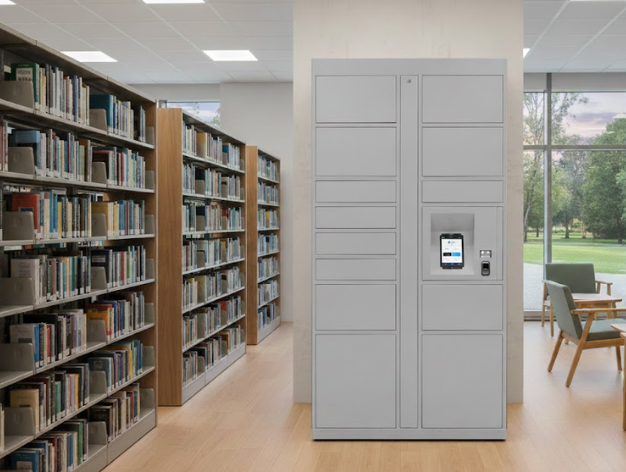
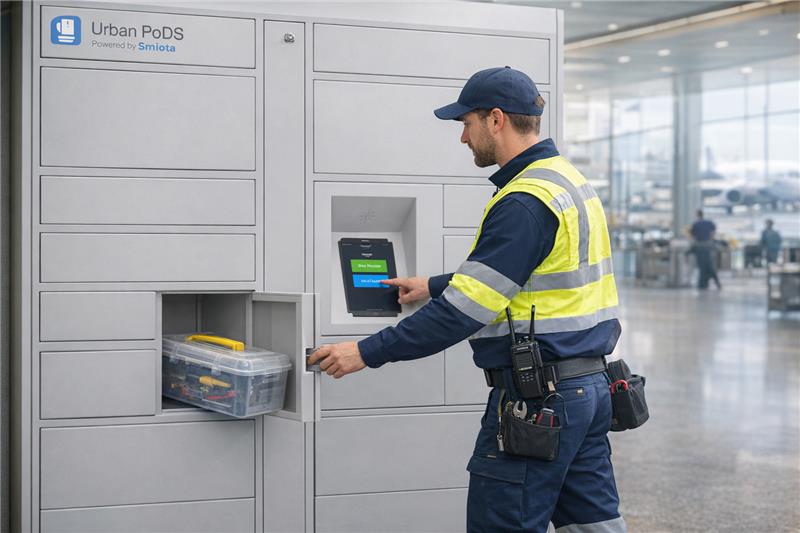
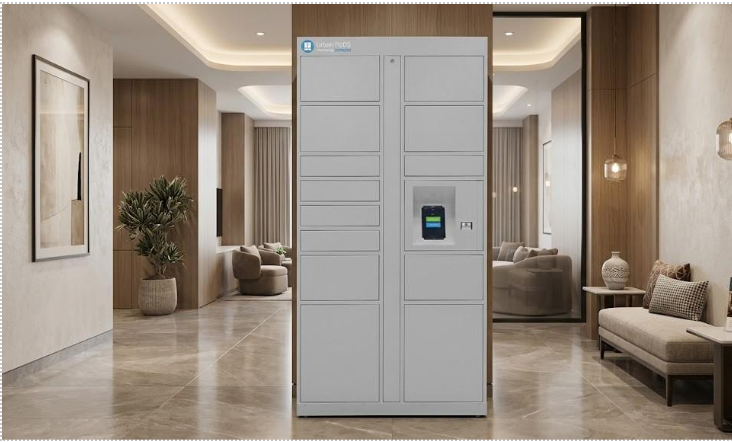
Smart lockers are usually defined by their functionality – secure compartments, digital or code-based access, and self-service usage – but in extended stay settings, their value extends beyond simple utility.
Even without personalization features, lockers provide something important: a fixed, consistent space outside the room, a reliable storage point that does not change daily, and a clear boundary between different types of belongings. Together, these qualities transform them into micro-territories – small but meaningful extensions of personal space.
They don’t need to be customized to feel personal. They simply need to be predictable and exclusively accessible.
Creating Psychological Boundaries
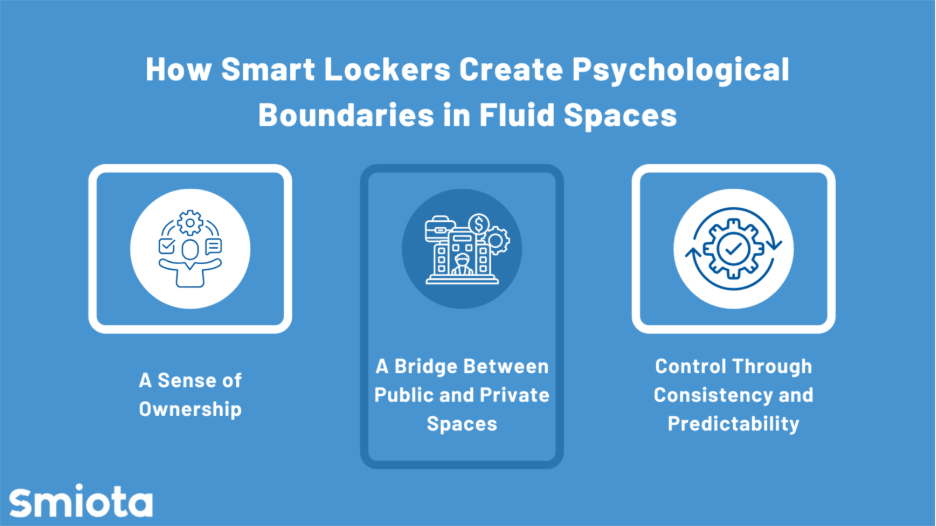
Smart lockers help introduce structure into an otherwise fluid environment. They do this in a few key ways:
1. A Sense of Ownership
Even a basic assigned locker can create a subtle feeling of “this is mine.”
- No decoration or customization is required
- Ownership comes from consistent access over time
- Guests begin to associate the space with their routine
This small sense of ownership can improve comfort in a temporary setting.
2. A Middle Layer Between Public and Private
Hotels typically offer two extremes:
- Public spaces (lobby, corridors)
- Private room
Lockers introduce a third layer that is semi-private, offers controlled access, and remains personal while existing outside the room. This creates a more natural flow between spaces, similar to how people use storage areas at home.
3. Control and Predictability
One of the biggest stressors in extended stays is the lack of control. But smart lockers help restore some of that by allowing guests to decide what goes in, ensuring access is always available when needed, and providing a space that remains consistent throughout the stay. This predictability becomes a mental anchor in daily life.
Supporting Routine and Reducing Mental Load
When everything happens in one room, even simple decisions – like where to keep items – add up over time. Smart lockers help by acting as external storage anchors.
They allow guests to:
- Move non-essential items out of the room
- Create clearer separation between activities
- Maintain consistent placement of belongings
For example, work-related materials can be stored separately, fitness gear can be kept from cluttering the living space, and less-used items can remain out of sight yet accessible. This, in turn, leads to reduced clutter, fewer daily decisions, and improved focus and productivity.
Importantly, none of this depends on advanced features. The benefit comes from having a stable, designated place.
Identity Without Customization
In smart lockers, identity is expressed through how the locker is used. By providing a dedicated space for a guest to store gym gear, a remote worker to manage professional equipment, or a long-term resident to organize seasonal items, these lockers function as behavioral extensions of the guest that reinforce personal routines and maintain lifestyle structure. In this capacity, they serve as essential tools that support specific habits and daily choices, ultimately proving that they don’t just display a guest’s identity – they actively enable it.
Design Implications for Extended Stay Hotels
If hotels recognize this psychological role, lockers can be positioned more intentionally. Here are a few design elements extended stay hotels should consider when it comes to smart lockers:
Here are the core principles broken down into three focused bullet points:
- Strategic Placement and Visibility: Lockers should be positioned in well-lit, easily accessible areas rather than being tucked away as hidden back-end infrastructure. Maintaining high visibility ensures they feel like a seamless part of the guest experience rather than a utility afterthought.
- Operational Consistency and Simplicity: Prioritizing long-term assignments over frequent rotations creates a more stable environment for guests. Simple, reliable systems that function consistently are far more valuable than feature-heavy technology that introduces unnecessary complexity.
- Scalable Design and Intuitive Access: To minimize daily friction, the system must offer varied locker sizes to accommodate different needs and sufficient capacity for long-stay guests. Access methods, whether via codes or apps, must remain intuitive to ensure the user experience is as effortless as possible.
The goal is not to add complexity, but to reinforce clarity, stability, and ease.
A Small Feature with a Disproportionate Impact
In extended stay environments, comfort is not only about furniture or amenities – it is also about how space is structured and experienced. Smart lockers can play a significant role in putting space to the best possible use.
For example, Smiota lockers can be integrated into extended stay hotels to offer a personalized customer experience. They may appear to be a small addition, but they address deeper guest needs in subtle yet meaningful ways.
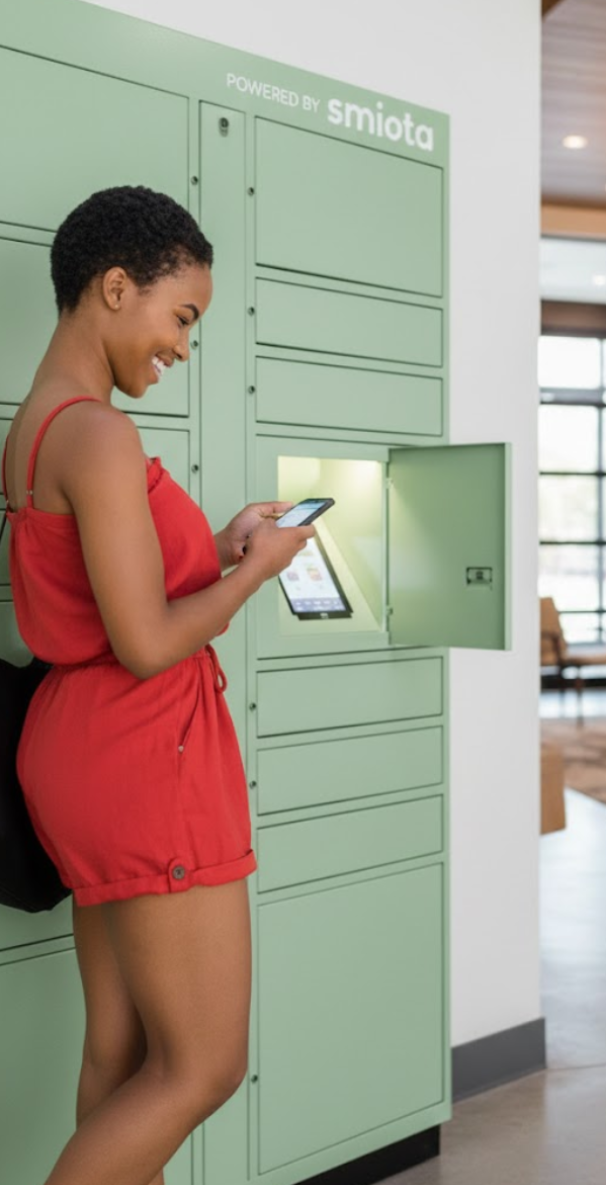
They help create a sense of defined personal space beyond the room, support routine and order by offering a consistent storage point, and restore a level of control in what is otherwise a temporary environment. Importantly, they achieve this without relying on extensive customization, complex technology, or significant operational investment, making them a practical yet impactful enhancement to the guest experience.
Conclusion: Rethinking the Role of Smart Lockers
Smart lockers are often treated as purely functional – tools for storage, delivery, or efficiency. But in extended stay hotels, their role can be broader. They can act as:
- Psychological boundaries
- Routine stabilizers
- Extensions of personal space
Even in their simplest form, they help guests navigate the complexity of temporary living.
As extended stay hospitality continues to grow, the focus will increasingly shift from providing space to shaping how that space feels. And sometimes, it is the smallest, most practical elements – like a simple locker – that make the biggest difference.
Looking to elevate the guest experience at your extended stay hotel? Talk to one of Smiota’s smart locker experts here.