
It usually begins with urgency.
A student remembers they need a textbook for tomorrow’s lecture. A professional wants to pick up a book after a long workday. A researcher needs quick access to a reference but cannot align their schedule with library hours.
What should be a simple task often turns into a frustrating experience.
Libraries, despite being essential spaces for learning and discovery, still operate within constraints. Fixed timings, long queues, manual processes, and occasional mismanagement of reserved books can create unnecessary friction. For users who are already managing packed schedules, even small delays feel significant.
But what if accessing a book felt as seamless as ordering something online?
This is where smart locker systems step in. Not loudly, not disruptively, but in a way that quietly transforms the experience from end to end.
To understand this better, let’s follow the journey of a single book. From the moment it is reserved to the moment it is picked up and returned; every step tells a story of how efficiency, convenience, and technology come together.
Chapter 1: The Reservation Stage
The journey starts with intent and a few clicks.
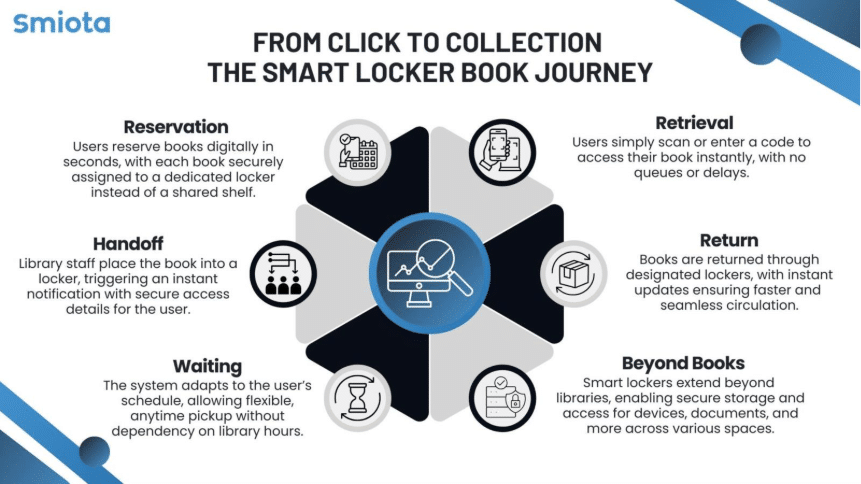
Instead of walking through rows of shelves, the user opens a digital platform. They search for the book, check availability, and place a reservation within seconds. It is quick, precise, and far more efficient than traditional browsing.
But in many libraries, this is where the efficiency stops.
Reserved books are often placed on shared shelves. Multiple users, multiple requests, and limited tracking can lead to confusion. Books may be misplaced, delayed, or difficult to locate when the user arrives.
Smart lockers introduce a simple yet powerful shift.
Instead of placing reserved books in a common area, each book is assigned a specific compartment. This creates structure. The book is no longer just “reserved” but securely allocated to a particular user.
This small change sets the tone for the entire journey. It replaces uncertainty with clarity and ensures that the process begins on a strong, reliable note.
Chapter 2: The Handoff Process
Once the reservation is in place, the responsibility shifts to the library staff.
They locate the book and prepare it for the next step. In traditional systems, this might involve manual coordination, verbal confirmations, or physical handovers that depend on timing.
With smart lockers, the process becomes far more streamlined.
The staff member places the book into a designated locker compartment. The system connects this physical action with digital tracking. The moment the locker is closed, the system updates automatically.
The user receives a notification.
It might be a message, an email, or an app alert. Along with it comes a secure access method such as a PIN or QR code. There is no ambiguity. The user knows exactly when their book is ready and how to access it.
This step removes one of the biggest pain points in traditional systems, which is the lack of real time communication. Instead of guessing or following up, the user stays informed without any effort.
Chapter 3: The Waiting Experience
Waiting is often where traditional systems create the most inconvenience.
Users must align their schedules with library hours. If they arrive late, they may miss their window. If they are too early, the book might not be ready. This dependency on timing can make even a simple pickup feel like a task.
Smart lockers completely change this dynamic.
The book waits for the user, not the other way around.
Whether it is early morning, late evening, or even outside standard operating hours, the locker remains accessible. Users can pick up their books when it fits naturally into their day.
This flexibility is more than just convenience. It gives users control.
A student can pick up a book after a late study session. A professional can stop by on their way home without worrying about closing times. The process adapts to their routine instead of disrupting it.
This shift, though subtle, has a significant impact on user satisfaction. It turns what used to be a rigid system into a flexible experience.
Chapter 4: The Retrieval Moment
Now comes the moment that defines the entire journey.
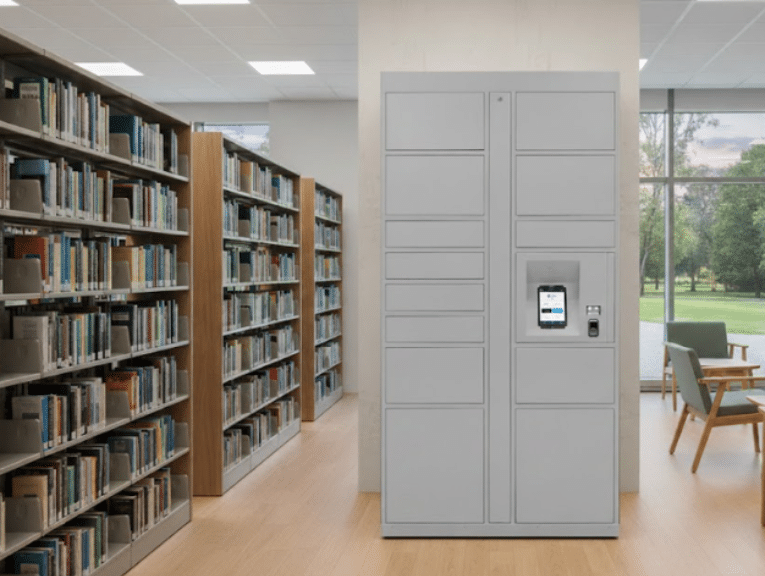
The user arrives at the locker system. There are no lines. No waiting counters. No need to interact with staff unless they choose to.
They enter their PIN or scan their QR code. Within seconds, the locker opens and the book is right there.
This interaction is simple, but it carries a sense of efficiency that traditional systems often lack. The entire process takes only a few seconds, yet it eliminates delays that could otherwise take several minutes or more.
Behind the scenes, the system records everything. It logs the transaction, updates the status, and maintains a clear record of who accessed what and when.
For the user, it feels effortless. For the organization, it ensures accountability and accuracy. This is where the true value of smart lockers becomes visible. They remove friction without adding complexity.
Chapter 5: The Return Process
Every journey eventually comes full circle.
After using the book, the user needs to return it. Traditionally, this involves visiting the return desk, waiting in line, and relying on staff to process the return.
Smart lockers simplify this step just as effectively as they simplify pickup.
Users can drop the book into a designated return compartment. The system logs the return instantly and updates the inventory. There is no need for manual intervention or extended waiting.
This creates a continuous and efficient cycle. Books move faster between users. Staff spend less time managing routine transactions. The entire system operates more smoothly.
What was once a multi-step, time consuming process becomes quick and seamless.
Chapter 6: Beyond Books
While this journey focuses on books, the potential of smart lockers goes far beyond library systems.
In universities, they can be used to store laptops, lab equipment, and important documents. In offices, they manage internal asset distribution and package deliveries. In residential spaces, they simplify parcel management for residents.
The core idea remains the same. Create a secure, automated, and user-friendly system for handling physical items.
This adaptability makes smart lockers a valuable addition across multiple environments. They are not limited to one use case. Instead, they evolve with the needs of the organization.
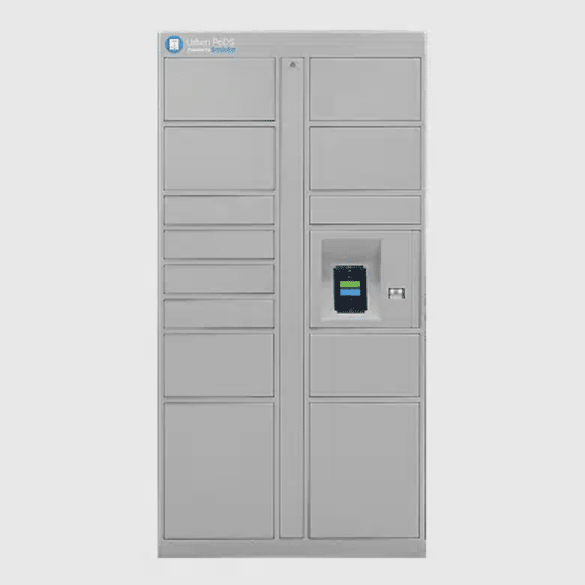
Enabling the Experience with Smiota Smart Lockers
While the concept of smart lockers is powerful, the real impact comes from how well the system is designed and implemented.
This is where Smiota smart lockers play a critical role.
Smiota brings together technology, usability, and scalability to support the entire journey from reservation to retrieval. It ensures that every step is connected, visible, and easy to manage.
With features like real time tracking, secure access controls, and seamless system integration, Smiota enables organizations to deliver a consistent and reliable experience. It reduces manual effort, minimizes errors, and improves operational efficiency.
At the same time, it keeps the user experience simple and intuitive.
Whether it is a library, a university campus, or a corporate environment, Smiota smart lockers adapt to different needs without adding complexity. They act as the backbone that supports a smooth and efficient system.
Conclusion
The journey of a book may seem simple at first glance. But when you break it down, it reveals how many steps are involved in making access smooth and reliable.
From reservation to retrieval and return, each stage plays a role in shaping the user experience.
Smart locker systems transform this journey into something far more efficient and user focused. They remove delays, reduce dependency on timing, and create a sense of ease that users appreciate instantly.
What was once a process filled with small frustrations becomes something seamless and intuitive. And in a world where time matters more than ever, this shift is not just beneficial. It is necessary.
Access to books and knowledge should never feel complicated. It should feel natural, flexible, and always within reach.